ISRS Seminars The ISRS invites to the (online) ISRS Seminars organized 3 times a year. If you are interested in participating, please send an email to write.isrs@gmail.com. Participation in the seminar is free.
Upcoming seminars
Archive (view video recording)
-
ISRS Seminar entitled “Beyond Self-Help Solitude to Withdrawal as Island Consciousness: Choosing Loneliness as Collectivist Resistance”. Our guest will be Professor Samir Dayal from Bentley University in the US.
Professor Samir Dayal currently works at the Department of English and Media Studies, Bentley University. Samir does research in World Literatures, Literary Theory and English Literature. He is a board member for the Society for the Psychological Study of the Arts (PSYART) and is very widely published on a range of themes.
ABSTRACT:
This seminar talk, drawn from my ongoing book project Choosing Loneliness: Literary Representations of Withdrawal, Disaffection, and Elective Alienation, examines the critical distinction between individualistic withdrawal as self-care and collective refusal as political resistance. In our post-COVID moment, withdrawal narratives have proliferated—from Mark Manson’s The Subtle Art of Not Giving a F*ck to mindfulness retreats—often devolving into privileged self-help that abandons communal responsibility. Against this backdrop, I explore how certain forms of chosen isolation function as sophisticated political critique rather than elite retreat. I contrast the burgeoning culture of self-optimisation represented in Manson’s work as well as in the somewhat more subtle version presented in Jenny Odell’s How to Do Nothing, which offers valuable insights into resisting capitalism’s attention economy but risks remaining within privileged spheres of cultural capital. I contrast this therapeutic trend with the approach that emerges in Richard Powers’ Playground (2024). One narrative axis in the novel presents collective refusal as aligned with the imperatives of environmental and social justice. Powers’ novel centers on Makatea, an island community in the Tuamotu Archipelago that collectively refuses AI-mediated seasteading by a neocolonial multinational corporation. This communal decision—which however is not an easy choice–embodies what I term “island consciousness”: strategic withdrawal that resists digital neocolonialism while preserving Indigenous sovereignty and environmental stewardship.
Unlike Manson’s selective indifference or Odell’s individual practices of attention, island consciousness operates through collective deliberation and shared responsibility, maintaining engagement with global systems while refusing extractive intimacies. Building on earlier chapters analyzing a wide range of more individually chosen loneliness—a choice often ambivalent, reluctant, anxious, or even forced, from Sophocles’ Antigone to Herman Melville’s “Bartleby the Scrivener,” to Nobel laureate Han Kang’s The Vegetarian, among many others–this talk explores what happens when self-alienation operates at the community level. Through close reading and cultural analysis, I argue that not all withdrawal is equal: while self-help isolation represents privileged disengagement, collective refusal can mobilize radical resistance to systems of extraction and domination, serving rather than abandoning the commons.
-
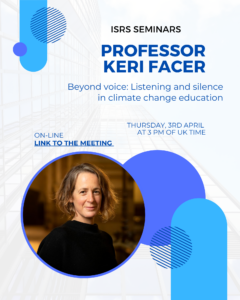
Professor Keri Facer – Professor of Educational and Social Futures, University of Bristol and Guest Professor of Education for Sustainable Development, SLU, Uppsala
-
Silence as a meditative practice: three exemplary cases in dialogue
Drawing from the experience of the support-group ‘Preparing to retire well and beyond’, this paper conceptualises silence as a meditative practice. It showcases and compares three case studies.
‘Preparing to retire well and beyond’ is a reflective practice group, which supports the emotional and spiritual wellbeing of retiring and retired Anglican clergy in the Diocese of Truro (England). The first case study is based on the findings of its evaluation. It presents silence as a spiritual practice, which facilitates meditation.
In the second case study, this notion of meditative silence is contextualised in the work of the late Roman Catholic priest and philosopher Romano Guardini, and most specifically his ‘Meditations before Mass’ (2013). This collection was first published in Germany in 1939 as ‘Besinnung vor der Heiligen Messe’.
Engaging with the notions of silence as a meditative practice identified in the first and second case studies, the final example showcases silence in health care settings. More specifically, it focuses on chaplaincy and how ‘meditative’ silence becomes a safe space in hospitals.
These three case studies speak of the relevance of silence as a meditative practice in faith-based and secular contexts.
Biography
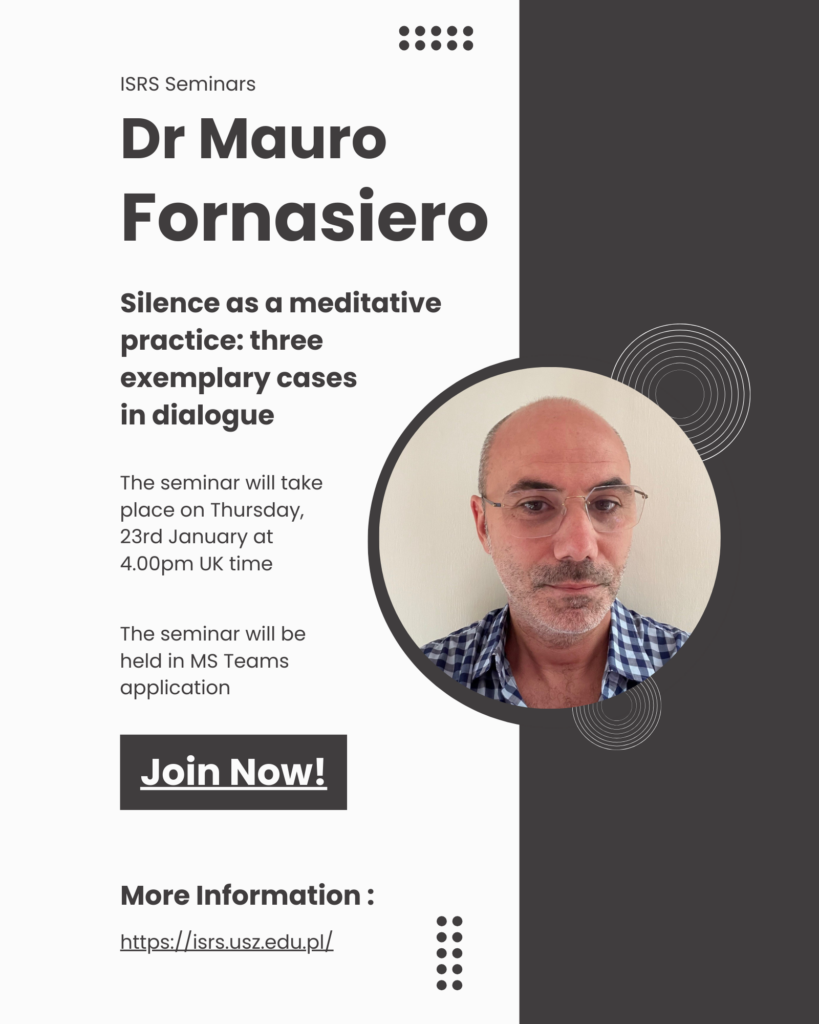
Dr Mauro Fornasiero is a social scientist with expertise in the evaluation of complex interventions in health, social care, education, and in religious contexts.
In 2017, he developed an interest in spiritual wellbeing when he worked at the ‘WHO Collaborating Centre for Culture and Health’ (University of Exeter) in an interdisciplinary project on subjective wellbeing.
His translation -from English to Italian- of the monograph ‘Cassian the Monk’ (Stewart, 1998) for ‘Edizioni Scritti Monastici’ (Abbey of Praglia, 2019) cemented his interest in monastic spirituality and its relevance for wellbeing.
Since 2022, he has assisted the The Revd John Eatock, Dean for Retired Clergy in the Diocese of Truro, with the evaluation of the reflective practice group ‘Preparing to retire well and beyond’. Exploring the meaning of priesthood in retirement, this group supports the emotional and spiritual wellbeing of Anglican clergy approaching retirement and in retirement.
In partnership with Liverpool Anglican Cathedral and York St John University, he is currently developing a project on wellbeing, which is informed by the science of cathedral studies (Francis, 2015).
-
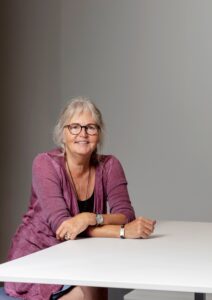 What happens when a student, present in a classroom full of people, remains silent and unseen? If a student is both silent and invisible, can other students and the teacher truly perceive and notice that individual? This presentation explores the multifaceted nature of silence and invisibility within educational settings and broader societal contexts. It examines various ways to understand and respond to student silence and invisibility. It discusses the significance of these phenomena and their implications for education. It argues for the importance of listening to the silent and seeing the invisible as essential steps toward making the unseen visible. To understand and have insight into the meaning of silence and invisibility is of great importance, not only in educational settings, but for life itself.
Eva Alerby is a Professor of Education and holds a chair at the Department of Health, Education, and Technology at Luleå University of Technology in Sweden. She also serves as a Visiting Professor at the Department of Education at UiT – The Arctic University of Norway. Her research interests include relationships, identity, and diversity in education, as well as the philosophical and existential dimensions of education, such as embodiment and embodied knowledge, place and space, time and temporality, silence, and tacit knowledge. Her most recent book is Silence Within and Beyond Pedagogical Settings (2020). Additionally, she co-authored a recent article titled “Silent and Invisible Students: The Importance of Listening to the Silence and Seeing the Invisible” with J. Brown, published in the Journal of Silence Studies in Education (2021).
-
In our evolutionary past, attachment was a necessary primary source of motivation because helpless human youngsters were not able to survive the danger of aloneness. We evolved as a species that thrives only in collaboration and our inborn mechanisms make loneliness a painful experience.
I will use current developmental and neuroscientific research to show that the insecure forms of attachment are, in fact, reactions to being left alone for too long and/or often too early, while disorganized attachment is a reaction to the complete lack of predictability in the together-alone dynamic. Clinical work and research will be summarised to point out that the other significant concepts in the domain of early attachment are also possible to define through loneliness: trauma is an overwhelming togetherness; neglect is an overwhelming aloneness; implicit relational knowing is the most important asset one can take from the earliest childhood.
Finally, I will review data indicating that both attachment and parenthood are curiously similar to addictions, which, once again, shows that most dangerous enemy was not cold, hunger or even predators, but being exposed to these perils when alone.
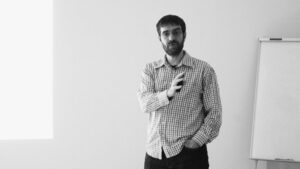 Aleksandar Dimitrijević, PhD, is a clinical psychologist and psychoanalyst in private practice in Berlin. He worked as a university lecturer for more than twenty years. He has given lectures, seminars, university courses, and conference presentations throughout Europe and in the US. He is the author of many conceptual and empirical papers about attachment theory and research, psychoanalytic education, and psychoanalysis and the arts, some of which have been translated into German, Hungarian, Italian, Slovenian, Spanish, and Turkish. He has also edited or co-edited twelve books or special journal issues, the most recent of which are Silence and Silencing in Psychoanalysis and From the Abyss of Loneliness to the Bliss of Solitude (both with Michael B. Buchholz).
 -
We are pleased to invite you to the next ISRS Seminar entitled “The Problem with The Loneliness Epidemic”. Our guest will be Professor Olivia Sagan from Queen Margaret University in Edinburgh.
Professor Olivia Sagan (MA, PhD, MBACP, CPsychol, AFBPsS, PFHEA) is the Centre Director for the Centre for Applied Social Sciences, a Principal Fellow of the Higher Education Academy (HEA), an Associate of the Royal Society for Public Health, a member of the Undergraduate Education Committee of the British Psychological Society (BPS) and a member of British Association for Counselling & Psychotherapy (BACP). Olivia’s area of research expertise is in phenomenological qualitative research, exploring first person narrative of mental illness and its interface with creative expression and strategies for wellbeing. She works with a numer of community-based mental health organizations as part of this work, and is involved in arts practice-based PHD projects with researchets with long-term mental illness. Olivia is regularly involved in overseas humanitarian projects.
In this seminar Olivia will give an overview of the burgeoning research into loneliness and also explore the popular discourse surrounding it.
She will argue that much of the research and discourse are entrenched in assumptions and deficit language. These reinforce the stigma of loneliness and deny agency while failing to pay heed to the structural forces that trigger and maintain loneliness as ‘an epidemic’ of 21st century life.
The seminar will take place on Thursday 27th April 2023 at 4 pm of UK time /11.00 US EST time /5pm Polish time / 5pm Malta /6pm Israeli time / 6pm Turkish time / 11pm Hong Kong / 1am next day Melbourne. It will be held in MS Teams application. If you want to join, click here.
-
The Lonely Patient
I have spent a great deal of time in hospitals. They are often huge communities that feel like towns, and there may be thousands of staff, who are ‘at home’ there. For many patients, these communities are frightening places where the environment is alien and the staff have their own language. The illness or injury that takes a patient into a hospital is itself stressful because it is the cause of pain and fear. Being afraid in an alien environment can most definitely be a lonely experience even though the patient is surrounded by people.
We should feel that hospitals are there for us, to lead us to healthy and full lives, but it can feel as if they see us on their terms and do not always care for our emotional health. I work with local hospitals to improve patient experience and patient safety. I listen to patients, hear their concerns and use their stories, and my own, to train clinical staff and shape hospital policy. In a world where medicine is high-tech, many of my recommendations take us back to the most fundamental aspects of patient care by looking at the relationships between patients and staff and considering how we can lessen the loneliness of the patient.
-
 This contribution takes its inspiration from Edward Jabès’ observation that ‘thought has no ties: it lives by encounter and dies of solitude’ (Jabès, 1994). It will draw on reflections that have arisen in the process of organising a ‘convivium’ for a young colleague who is facing a terminal illness (Pirrie, 2022).
Facing the prospect of one’s imminent demise can be a time when we are confronted with being ‘but one’ in our mortality. And yet perhaps it is only by engaging with our mortality that we can make sense of what is meaningful in our lives and what is not. Only in this way can we fully appreciate the preciousness of the now and the intimacy of human connection, qualities that paradoxically are perhaps best appreciated in solitude, or in alone/together forms of association (in a theatre or cinema, for instance). Organising the convivium referred to above has brought about an anticipated ‘renewal of generosity’ among the prospective participants, casting further light on the being alone/together in higher education that was the subject of my co-authored contribution to the Bloomsbury Handbook of Solitude, Silence and Loneliness. The heightened sense of community and solidarity generated by the prospect of the convivium was also the animating principle for the creation of Dancing in the Dark. A Survivor’s Guide to the University, a richly illustrated pocket book (an anti-handbook, of sorts) in which the art and the text live by encounter and die of solitude (Pirrie et al, 2022).
Frank, A. (2004) The Renewal of Generosity: Illness, Medicine and How to Live. Chicago: University of Chicago Press.
Jabès, E. (1996) The Little Book of Unsuspected Subversion, Stanford University Press.
Pirrie. A. (2022) ‘Educating for (the blossomest) of blossoms’, presentation at a convivium on the arts, finitude and education at Moray House School of Education, 29th October 2022.
Pirrie, A., Fang, N. and O’Brien, E. (2022) Review of Dancing in the Dark. A Survivor’s Guide to the University, Educational Philosophy and Theory
Anne Pirrie is a Reader in Education at the University of the West of Scotland. Formerly a contract researcher, Anne is a generalist with an eye for the particular. Her book Virtue and the Quiet Art of Scholarship: reclaiming the university (2019) explores the conditions for human flourishing in an environment blighted by managerialism. She considers her role as a teacher in the same terms as Nan Shepherd (1893-1981), the author of The Living Mountain: to try to prevent a few of the students who pass through the institution from conforming altogether to the approved pattern.
-
 The seminar will take place on Thursday 28th October at 4pm of UK time /11.00 US EST time /5pm Polish time / 5pm Malta /6pm Israeli time / 5pm Turkish time / 11pm Hong Kong / 1am next day Melbourne.
This presentation considers the multifaceted nature of solitude in schools and schooling, with particular attention paid to the solitude issues of schools as a system of social education. In such a context solitude is a personal matter but also touches the crowd, the community. What is the dialogue between these two domains of personal and public when it comes to people choosing aloneness? Furthermore what other dialogues might be involved that both the personal life of people and the social, public side of living (in this case through education in action) might not know or not hear? I am interested in the context of the tension inherent in the above in the interplay of self and “self-other” discussed within the therapeutic framework of internal family systems (IFS as started by Richard Schwartz). What is it when we achieve solitude in schools only to discover within ourselves is a multitude of parts (acting as separate “beings”) impossible for us to escape but possible to educate?
Biography
Dr Helen E Lees is an independent scholar, specialising in ways for people to achieve inner peaceful selfhood via the realisations inherent in educating oneself. She recently wrote the chapter Schooling and Solitude in The Bloomsbury Handbook of Solitude, Silence and Loneliness (Stern, Walejko, Sink, Wong, 2021). She lives and works near Florence, Italy as a writer and educator.
The meeting will be held on MS Teams. If you want to join, click on the link ISRS Seminar 28.10.2021
If you are interested in participating, please send an email to write.isrs@gmail.com
-
 Professor Amanda Fulford (Edge Hill University)
Title: Solitude: Encounter, Communion and Revealing in Shepherd and Thoreau
The seminar will take place on Friday 9th July at 3 pm of UK time /10.00 US EST time /4pm Polish time / 4pm Malta /5pm Israeli time / 5pm Turkish time / 10pm Hong Kong / 0am next day Melbourne.
Abstract: This presentation will consider what it might mean to experience solitude in nature through the work of two writers: the 19th nineteenth-century American philosopher, essayist and naturalist, Henry David Thoreau, and Anna (Nan) Shepherd, the 20th twentieth-century author and poet. It will show that the life that both these writers spent, often (though not always) alone in nature, should not lead to an understanding of their works merely as self-help texts for ‘getting away from it all’ and spending time in the outdoors alone to de-stress. Nor are their works appeals to live some kind of hermit-like existence alone in nature. Rather, both books are richly poetic, deeply philosophical works that open up questions of how, through the practices of solitude, we are opened up to the possibilities of society with Nature herself. This radically shifts our understanding of what is meant by solitude (commonly, as the state or situation of being without human company), and opens up a richer understanding developed through ideas of encounter and engagement, solitariness and communion, and separation and revealing.
-
 The seminar will take place on 22nd April at 3 pm of UK time /10.00 US EST time /4pm Polish time / 4pm Malta /5pm Israeli time / 5pm Turkish time / 10pm Hong Kong / 0am next day Melbourne.
Richard E. Cleveland, PhD is an associate professor and program director of the Counselor Education Program at Georgia Southern University, USA. His research interests include mindfulness, school counseling, and psycho-physiological responses to traumatic incidents. He has published on student wellness in schools, contemplative practices and mindfulness interventions with first responders. Additionally, Richard is a practicing nationally board-certified mental health clinician.
Although children often demonstrate silence, adults may not always consider whether such experiences are healthy or detrimental. Healthy silence must recognize two integral factors: differing cultural expectations pertaining to children and silence; and the role of agency. This presentation gives an overview of common cultural perspectives on silence and a synopsis of definitional aspects of silence. As the majority of children’s daily lived experiences occur in schools, addressing silence in the school/classroom setting seems relevant for all helping-profession practitioners working with children especially those in and educational/school setting. Parallels between mindfulness and solitude are presented as a means for introducing interventions that foster healthy silence for children. The presenter hopes to persuade the argument that healthy silence is a necessary aspect of human development, and not solely reserved for adults.
-
 Our first guests will be outstanding specialists Malka Margalit and Eyal Rosenstreich from Peres Academic Center who will give a lecture on Loneliness and hope during childhood and adolescence: Personal and interpersonal perspectives
Malka Margalit, Ph.D is a professor and Dean of the school of behavioral sciences, Peres Academic Center, Professor emeritus, Tel-Aviv University. Among others, she was the laureate of the Israeli prize 2017, for her research in education. Research interest: Loneliness, hope theory, social support and learning disorders.
Eyal Rosenstreich, Ph.D is a senior lecturer and the head of the methodological studies. Research interests: Loneliness, mindfulness, false memory, conscious and unconscious memory processes.
The seminar will take place on 28th January at 3 pm of UK time. (Polish time: 4pm; Israeli time: 5pm; California time: 7am; Hong Kong: 11pm; Australia: 2am – we are sorry for that, our Australian friends!)
The seminar will be held on the MS Teams platform. If you want to participate, write to us at write.isrs@gmail.com We will send you a link with access to the event.
Abstract
Loneliness and hope are gaining a special significance during the worldwide outbreak of COVID-19, the social distancing international policy and the periodical lockdown. Recent developmental studies and a comprehensive meta-analysis demonstrated the stability of inter-individual differences, and call for a special awareness to the impacts of their social and emotional intra- and interpersonal antecedents, concomitants, and consequences (Beller & Wagner, In press; Mund et al, 2020; Mund, Freuding, et al., 2020).The significance of awareness to loneliness, hope and solitude in the early developmental stages will be demonstrated in the presentation through focusing on development of risks, resources and coping within contextual and cultural perspectives (George-Levi, Schmidt-Barad & Margalit, In press). Considering educational and interventional considerations, we shall propose future research and intervention directions.
References
Beller, J., & Wagner, A. (in press). Loneliness and health: The moderating effect of cross-cultural individualism/collectivism. Journal of Aging and Health. https://doi.org/10.1177/0898264320943336
George-Levi, S., Schmidt-Barad, T., & Margalit, M. (in press). Loneliness in childhood. In J. Stern, C. A. Sink, M. Walejko, & P. H. Wong (Eds.), The Bloomsbury Handbook of Solitude, Silence and Loneliness, Bloomsbury.
Mund, M., Freuding, M. M., Möbius, K., Horn, N., & Neyer, F. J. (2020, Feb). The stability and change of loneliness across the life span: A meta-analysis of longitudinal studies. Personality and Social Psychology Review, 24(1), 24-52. https://doi.org/10.1177/1088868319850738
Mund, M., Lüdtke, O., & Neyer, F. J. (2020). Owner of a lonely heart: The stability of loneliness across the life span. Journal of Personality and Social Psychology, 119(2), 497-516. https://doi.org/10.1037/pspp0000262