Rafał Iwański
Posts by Rafał Iwański:

Call for book chapter contribution
Call for book chapter contribution – The lonely life of ethnic minority academics in the West (part of loneliness and solitude book series)
Introduction:
Ethnic minority academics constitute an important part of academic communities, and also play an irreplaceable role in promoting equality, diversity and inclusion in higher education. Even though minority ethnic academics are currently under presented in higher education, it is believed that universities are keen to improve the portion of such staff. The purpose of this book is to explore the loneliness experience of these academics, in particular, at their different career stages, and also the impact of loneliness on their career suitability.
Topics of interest include but are not limited to:
• Lonely life working as academics
• Loneliness and isolation among BAME people
• The rise of loneliness among BAEM academics at different career stages
• The impact of loneliness on sustainability
• Factors contributing to loneliness, such as discrimination, racial inequality, culture and languages
• Mitigating and preventing loneliness
Editor: Christine O’Dea
Publisher: Bloomsbury
Deadline for expressing your interest: 31st Jan. 2022
I am currently looking for international contributors. If you are interested in contributing a chapter, please email me at c.odea@yorksj.ac.uk

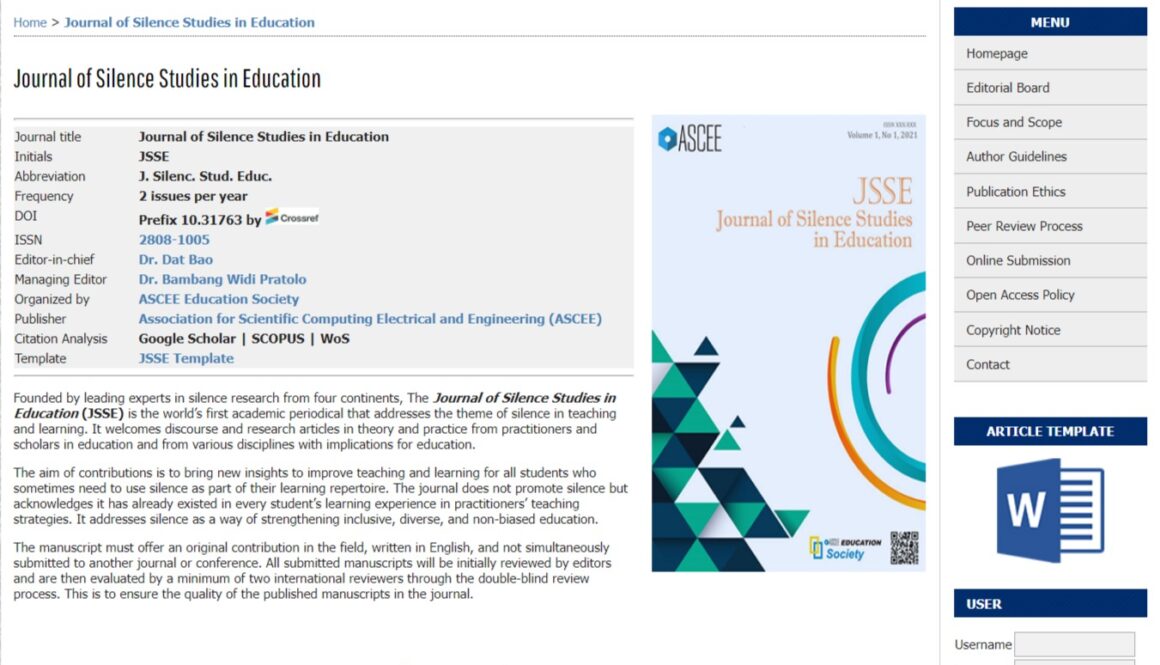
The first issue of Journal of Silence Studies in Education released
We are delighted to announce that the first issue of the Journal of Silence Studies in Education (JSSE) Vol.1 No.1, 2021 is now out and available. Journal of Silence Studies in Education (ascee.org).
Apparently, this is another significant step in the popularization of solitude and silence research. The editor-in-chief, dr Dat Bao from Monash University in Australia and managing editor, dr Bambang Widi Pratolo from Universitas Ahmad Dahlan in Indonesia are members of the ISRS and the Scientific Committee of the next edition of ISRS conference, Alone Together. Dr Bao accepted our invitation to give a speech as Keynote speaker there.
We recommend all the interesting articles published in JSSE, related to, inter alia: Silent and invisible students, Duoethnography, Romani people in Europe and Mexican migrant in the U.S., Language learners’ thoughts about silence.
We are looking forward to reading next ones, just as fascinating issues of the new journal.
The editors are now calling for contributions in Vol. 1(2) that will be published in May 2022 (the deadline is 1st April 2022).
The Bloomsbury Handbook of Solitude, Silence and Loneliness
We are happy to inform, that the Bloomsbury Publishing House has just published ebook The Bloomsbury Handbook of Solitude, Silence and Loneliness ed. by prof. Julian Stern (Bishop Grosseteste University, UK), dr Wong Ping Ho (the Education University of Hong Kong, China), dr Christopher A. Sink (the Western Washington University, USA) and dr Małgorzata Wałejko (University of Szczecin, Poland).
Hardback version will be published in mid-December.
The book is released under the auspices of the ISRS.
Congratulations to all the contributors (from: UK, China, US, Poland, Brazil, Israel, Romania, Sweden, Australia, Canada) and editors!
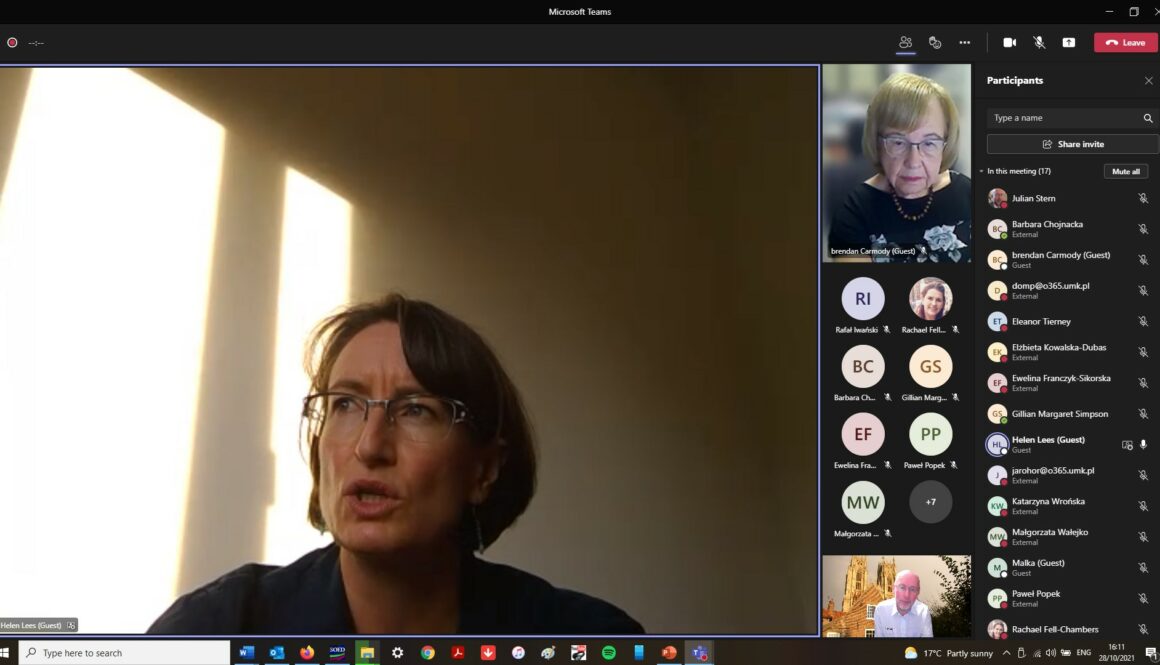
ISRS Seminar: Helen Lees: Lonely as a crowd: solitude in schools and the inner family (with reference to Internal Family Systems)
Participants from the UK, Poland, Italy, Australia, Israel and South Africa attended the fourth ISRS (International Society for Research on Solitude) online Seminar on the 28th October 2021, where Dr Helen Lees presented the theme “Lonely as a crowd: solitude in schools and the inner family (with reference to Internal Family Systems)”.
Dr Helen E Lees is an independent scholar, specialising in ways for people to achieve inner peaceful selfhood via the realisations inherent in educating oneself. She lives and works near Florence, Italy as a writer and educator.
According to Dr Lees, who has been exploring various therapeutic frameworks centered round the notions of trauma and self-care through silence, Internal Family Systems resolve crisis points but also flip the idea of solitude.
Richard Schwartz developed an Internal Family Systems model. We are created of many parts (which aren’t multiple personalities as a ‘disorder’); none of them are bad, but some of them may be doing bad things. Part of us becomes exiled as an ‘inner child’, who got frozen because of trauma. The exiles have protectors called ‘managers’ and ‘firefighter’ whose role is protect the vulnerable and wounded inner child.
The therapeutic work is to establish a relationship with the inner child but also realise these parts are not us; seeking for a true Self is the task here, possibly in solitude. Paradoxically, a person in solitude is not alone as they are with their internal family. Silence is used in a therapeutic manner: we face many voices/elements of ourselves and undertake a dialogue with them in a caring and compassionate way. The aim is to gain harmony within our own internal family, and, as a result, peace in solitude, peace with others and real Self-leadership.
The presentation was followed by a vivid discussion. Dr Lees was asked about the identity of the ‘real self’, links between IFS and Gestalt theory, and cultural specificities that may limit IFS.
We encourage you to look at the recording, published below.

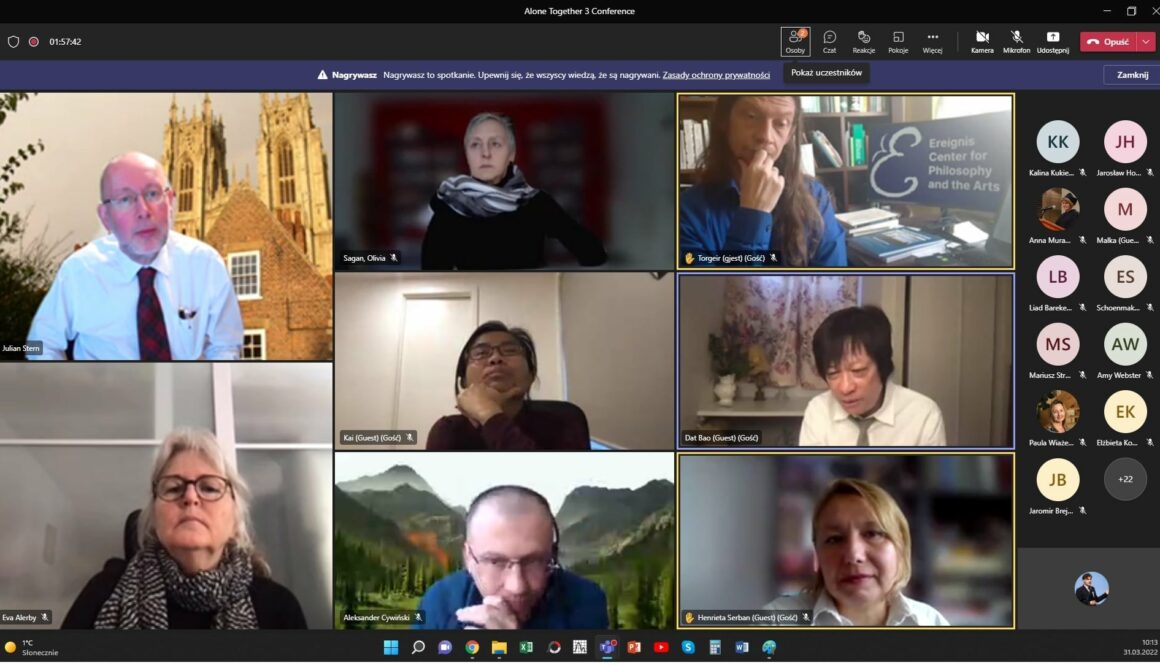
Alone Together – conference from 31st March to 2nd April 2022
“We must meet; we must communicate with one another; we must, it would seem, be alone together” (John Macmurray)
We welcome contributions to the third international pandisciplinary conference on solitude in community: Alone Together which will take place between 31st March and 2nd April 2022 in the University of Szczecin, Poland.
This is organized by the International Society for Research on Solitude (ISRS) with support from Bishop Grosseteste University (UK) and the Institute of Pedagogy of the University of Szczecin (Poland).
We welcome papers and posters on any issues related to solitude, silence and loneliness, from any discipline, and from researchers from all over the world. All papers and discussions will be held in English.
The submission of abstracts will be welcome till the 1st February 2022. (Later submissions will be considered if there is still room on the programme.) To submit, please fill in the form here: click on the link
The conference will be hybrid, so participation will be possible on-site in Poland, and also online. Participation on-site will require a fee, app. 100 USD/ 87 EUR / 75 GBP / 400 PLN for refreshments and conference materials (no accommodation included). The detailed information on the conference fee will be sent in the next call.
We are looking forward to meeting you!
Dr Rafał Iwański
on behalf of the ISRS and AT3 Organizing Committee
Journal of Silence Studies in Education
Founded by leading experts in silence research from four continents, The Journal of Silence Studies in Education (JSSE) is the world’s first academic periodical that addresses the theme of silence in teaching and learning. It welcomes discourse and research articles in theory and practice from practitioners and scholars in education and from various disciplines with implications for education.
Visit the magazine’s website (click here)
We recommend a book by our member Dat Bao, on ‘Understanding Silence and Reticence. Ways of Participating in Second Language Acquisition’.
What is the state of that which is not spoken? This book presents empirical research related to the phenomenon of reticence in the second language classroom, connecting current knowledge and theoretical debates in language learning and acquisition.
Why do language learners remain silent or exhibit reticence? In what ways can silence in the language learning classroom be justified? To what extent should learners employ or modify silence? Do quiet learners work more effectively with quiet or verbal learners? Looking at evidence from Australia, China, Japan, Korea, and Vietnam, the book presents research data on many internal and external forces that influence the silent mode of learning in contemporary education. This work gives the reader a chance to reflect more profoundly on cultural ways of learning languages.
https://www.bloomsbury.com/us/understanding-silence-and-reticence-9781441128539/

Amanda Fulford, Edge Hill University: Solitude: Encounter, Communion and Revealing in Shepherd and Thoreau
The third ISRS (International Society for Research on Solitude) Seminar took place on the 9th July 2021. Prof Amanda Fulford from the Edge Hill University presented the theme ‘Solitude: Encounter, Communion and Revealing in Shepherd and Thoreau’. There were participants from Australia, Poland, the UK, and the USA.
Professor Fulford by sharing her research on the two fascinating ‘solitude writers’ – the 19th nineteenth-century American philosopher, essayist and naturalist, Henry David Thoreau, and Anna (Nan) Shepherd, the 20th twentieth-century author and poet. Both inspiringly disrupted common notions of solitude. In their main works (‘Walden’ and ‘The Living Mountain’) solitude is understood in the context of encounter, communion and revealing. The meeting with radical, non-human otherness; communion with Nature, making a person “defenseless”; revealing – by bringing the ordinary into presence through a simple shifting of our perspective. Experiencing this kind of solitude doesn’t require escaping into the wild: it might be possible by entanglement with our world and ‘attentive attention’.
The presentation was followed by a vivid (and peaceful) discussion. The questions regarded (among others) anthropocentric meaning of solitude and loneliness, qualitative distinctions between contact with human and nature, and the differences between structured and unstructured experiences of solitude.
We encourage you to look at the recording, published below.

ISRS Seminar: Richard Cleveland: Children and Silence
Participants from nine countries (Canada, Ireland, Israel, Lithuania, Malta, Norway, Poland, UK, and USA) attended the second ISRS (International Society for Research on Solitude) Seminar on the 22nd April 2021. Dr Richard Cleveland presented the theme “Children and Silence”. Richard is an associate professor and program director of the Counselor Education Program at Georgia Southern University, USA. His research interests include mindfulness, school counseling, and psycho-physiological responses to traumatic incidents. He has published on student wellness in schools, contemplative practices and mindfulness interventions with first responders. Additionally, Richard is a practicing nationally board-certified mental health clinician.
Thanks to the speech the listeners could have experienced the depth and complexity hidden in the small word ‘silence’ referred to the educational and therapeutic practices with children. After an overview of common cultural expectations on silence – mainly negative ones – a synopsis of definitional aspects of silence was given. Understood as “a fertile mood in which the self is enriched and strengthened” (Elson), silence poses a component of healthy development and well-being, is present in various examples of religious formation, and proves more relaxing than the most relaxing genres of music. Determining the character of healthy silence, the presenter underlined its intentional character: the awareness of agency and autonomy is needed here, which might be gained by the use of mindfulness – a subject of common myths to be dispelled. The practice, which is paying attention in a particular way, is not ‘just a meditation’ or ‘panacea for stress’; does not relate only to the Buddhist tradition and can’t be properly practiced by apps and workshops (“McMindfulness” traps). Next, mindfulness was presented as a tool pursuing awareness and acceptance in Dialectical Behavior Therapy (DBT) to resolve tensions between opposing thesis and antithesis forces through synthesis. Richard described the relevance of the practices to P-12 Trauma-Informed Education, especially facing the consequences of Covid-19 pandemic, which magnified all the children’s previous challenges.
The presentation was followed by a vivid discussion. Dr Cleveland was asked about the meaning of acceptance (“Should we always accept where we are or who we are called upon to be?”), the role of silence through faith traditions, places in the curriculum where mindfulness can be practiced, etc. We encourage you to look at the recording, published below.