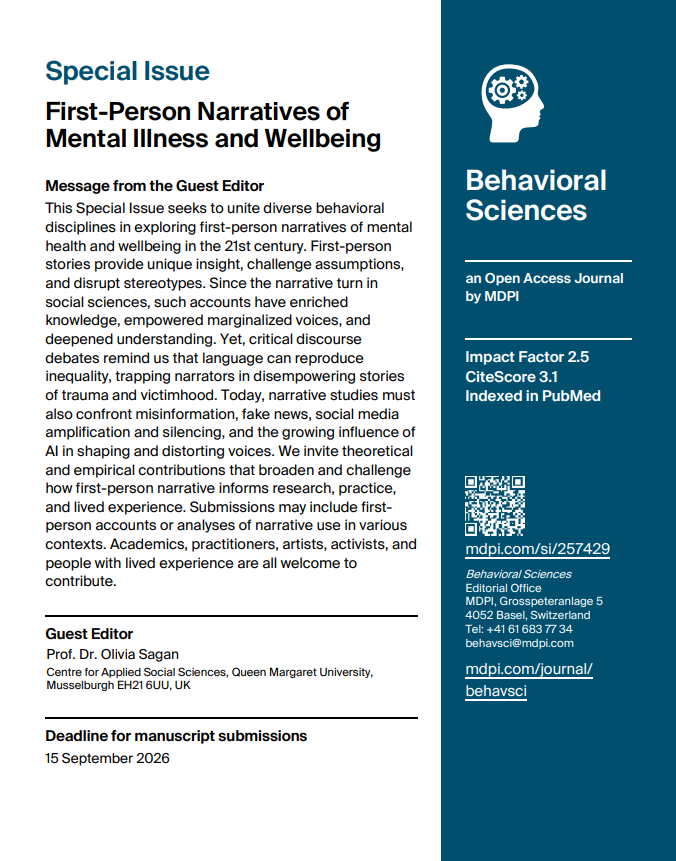
Call for contributions to a special issue of the Behavioral Sciences journal
1500hrs Registration Opens. Coffee & Collaboration.
1530hrs Welcome to the Conference. Opening ceremony.
1600hrs Keynote Session
Seeking More Solitude: Conceptualization and Implications of ‘Aloneliness’ – Robert Coplan
1730hrs Closing words for the day.
1815hrs Conference Gala Dinner.
0800hrs Registration Opens. Coffee & Collaboration.
0900hrs Welcome & Remembrance.
0900hrs Beginning a day of Dialogue.
0930hrs First Round of Parallel Sessions – 25min speaker presentations (2x); 15min discussion
Ballroom A
Ballroom B
Ballroom C
1045hrs Transition time / Break
1100hrs Second Round of Parallel Sessions – 25min speaker presentations (3x); 15min discussion
Ballroom A
Ballroom B
Ballroom C
1215hrs Lunch together
1330hrs Transition time / Break
1345hrs Keynote Session
1445hrs Transition time / Break
1500hrs Third Round of Parallel Sessions – 25min speaker presentations (3x); 15min discussion
Ballroom A
Ballroom B
1630hrs Coffee & Refreshments / Break
1645hrs Fourth Round of Parallel Sessions – 25min speaker presentations (2x); 15min discussion
Ballroom A
Ballroom B
Ballroom C
1800hrs Closing words for the day
1900hrs Dinner
Attendees dine on their own.
0800hrs Registration Opens. Coffee & Collaboration.
0900hrs Panel Session
1030hrs First Round of Parallel Sessions – 25min speaker presentations (3x); 15min discussion
Ballroom A
Ballroom B
1215hrs Closing Words of the Conference
1245hrs ISRS Information & Business Meeting
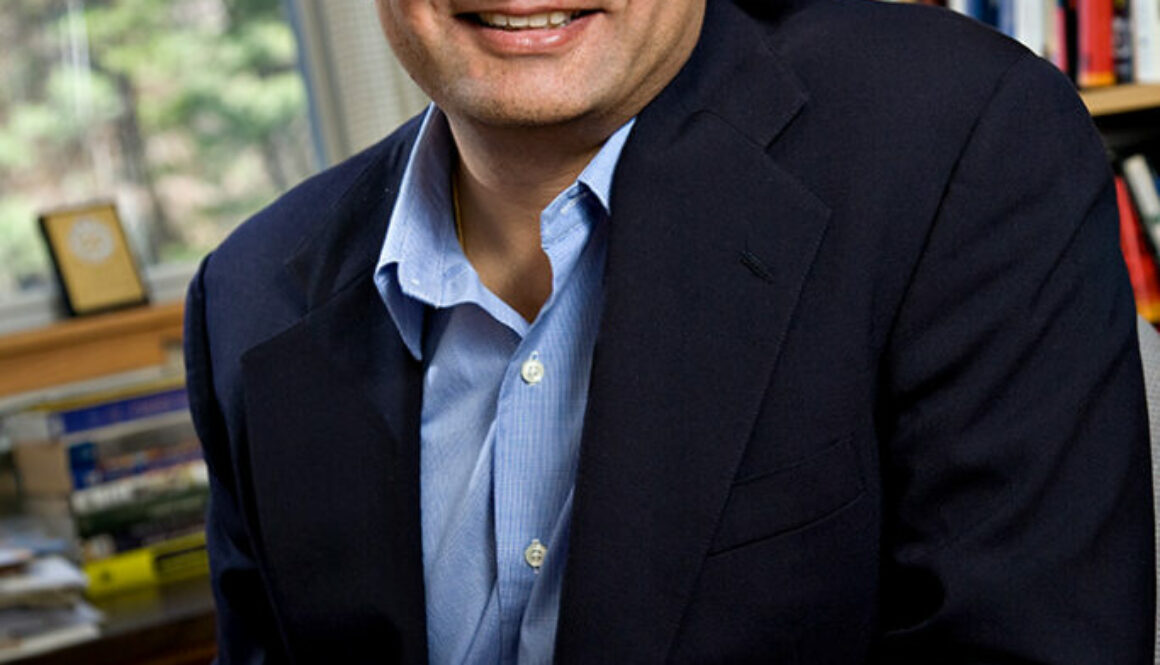
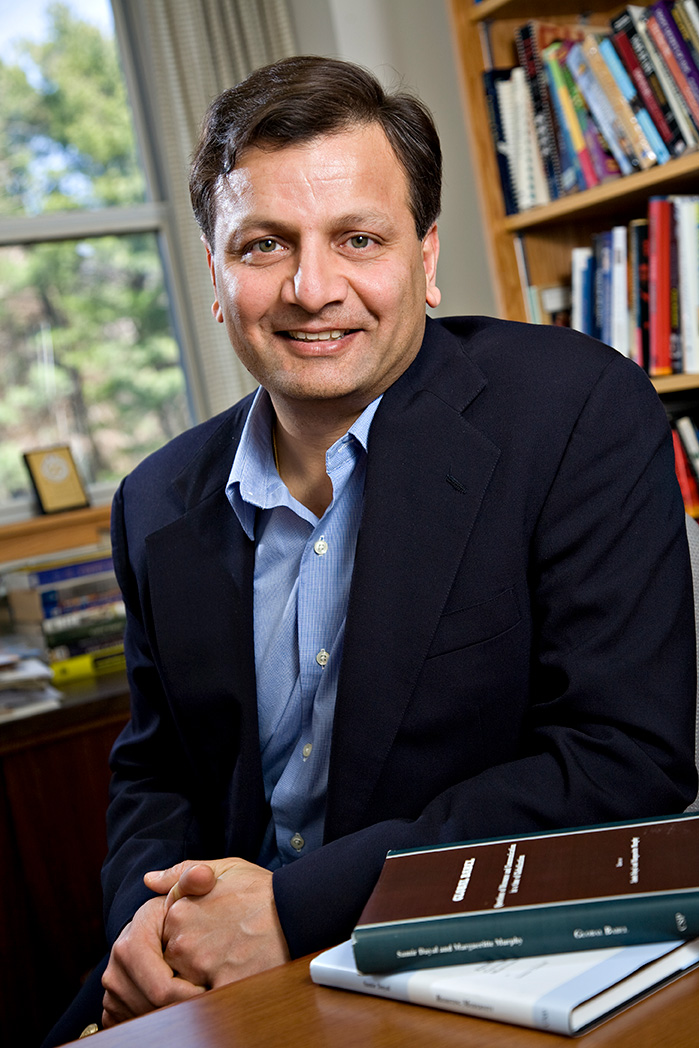
We are pleased to invite you to the next ISRS Seminar entitled “Beyond Self-Help Solitude to Withdrawal as Island Consciousness: Choosing Loneliness as Collectivist Resistance”. Our guest will be Professor Samir Dayal from Bentley University in the US.
Professor Samir Dayal currently works at the Department of English and Media Studies, Bentley University. Samir does research in World Literatures, Literary Theory and English Literature. He is a board member for the Society for the Psychological Study of the Arts (PSYART) and is very widely published on a range of themes.
The seminar will take place on Friday 7th November 2025 at 3 pm of UK time / 10.00 US EST time /4pm Polish time / 4pm Malta / 5pm Israeli time / 5pm Turkish time / 10 pm Hong Kong / 0.00 am Melbourne.
It will be held in MS Teams application. If you want to join, click here.
ABSTRACT:
This seminar talk, drawn from my ongoing book project Choosing Loneliness: Literary Representations of Withdrawal, Disaffection, and Elective Alienation, examines the critical distinction between individualistic withdrawal as self-care and collective refusal as political resistance. In our post-COVID moment, withdrawal narratives have proliferated—from Mark Manson’s The Subtle Art of Not Giving a F*ck to mindfulness retreats—often devolving into privileged self-help that abandons communal responsibility. Against this backdrop, I explore how certain forms of chosen isolation function as sophisticated political critique rather than elite retreat. I contrast the burgeoning culture of self-optimisation represented in Manson’s work as well as in the somewhat more subtle version presented in Jenny Odell’s How to Do Nothing, which offers valuable insights into resisting capitalism’s attention economy but risks remaining within privileged spheres of cultural capital. I contrast this therapeutic trend with the approach that emerges in Richard Powers’ Playground (2024). One narrative axis in the novel presents collective refusal as aligned with the imperatives of environmental and social justice. Powers’ novel centers on Makatea, an island community in the Tuamotu Archipelago that collectively refuses AI-mediated seasteading by a neocolonial multinational corporation. This communal decision—which however is not an easy choice–embodies what I term “island consciousness”: strategic withdrawal that resists digital neocolonialism while preserving Indigenous sovereignty and environmental stewardship.
Unlike Manson’s selective indifference or Odell’s individual practices of attention, island consciousness operates through collective deliberation and shared responsibility, maintaining engagement with global systems while refusing extractive intimacies. Building on earlier chapters analyzing a wide range of more individually chosen loneliness—a choice often ambivalent, reluctant, anxious, or even forced, from Sophocles’ Antigone to Herman Melville’s “Bartleby the Scrivener,” to Nobel laureate Han Kang’s The Vegetarian, among many others–this talk explores what happens when self-alienation operates at the community level. Through close reading and cultural analysis, I argue that not all withdrawal is equal: while self-help isolation represents privileged disengagement, collective refusal can mobilize radical resistance to systems of extraction and domination, serving rather than abandoning the commons.
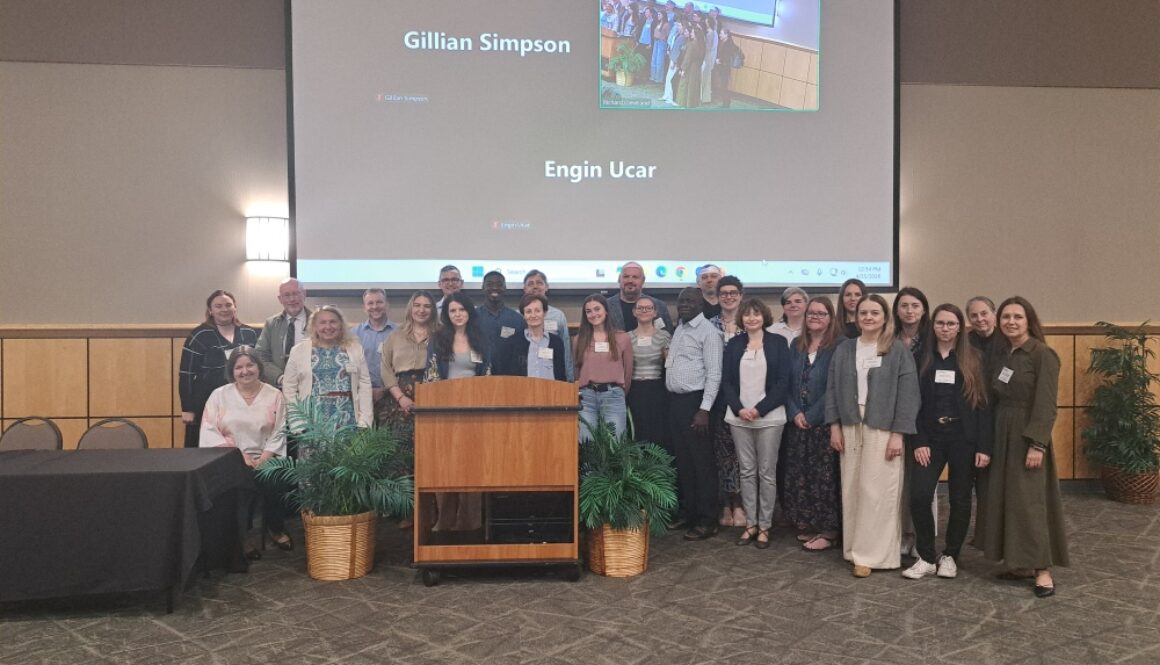
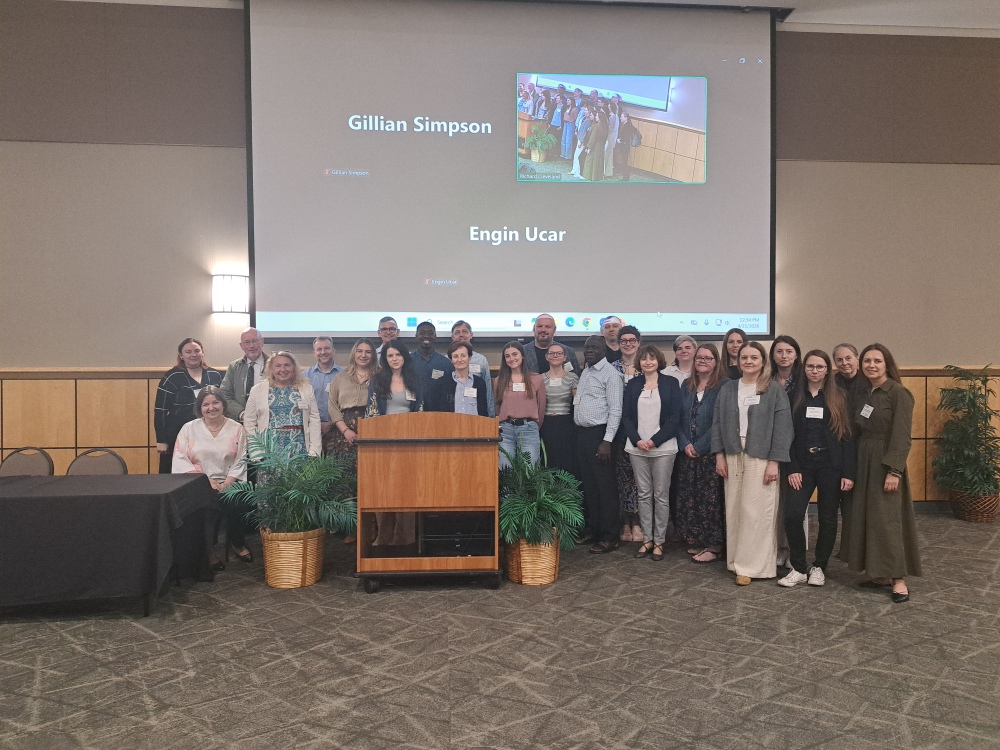
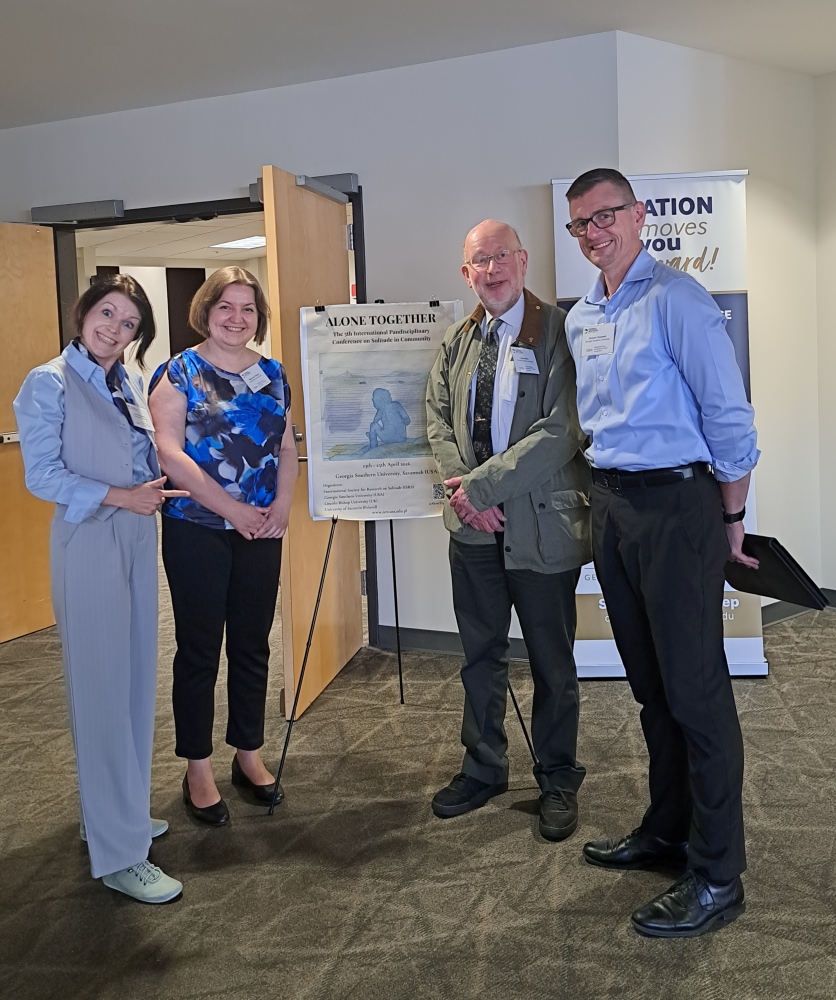
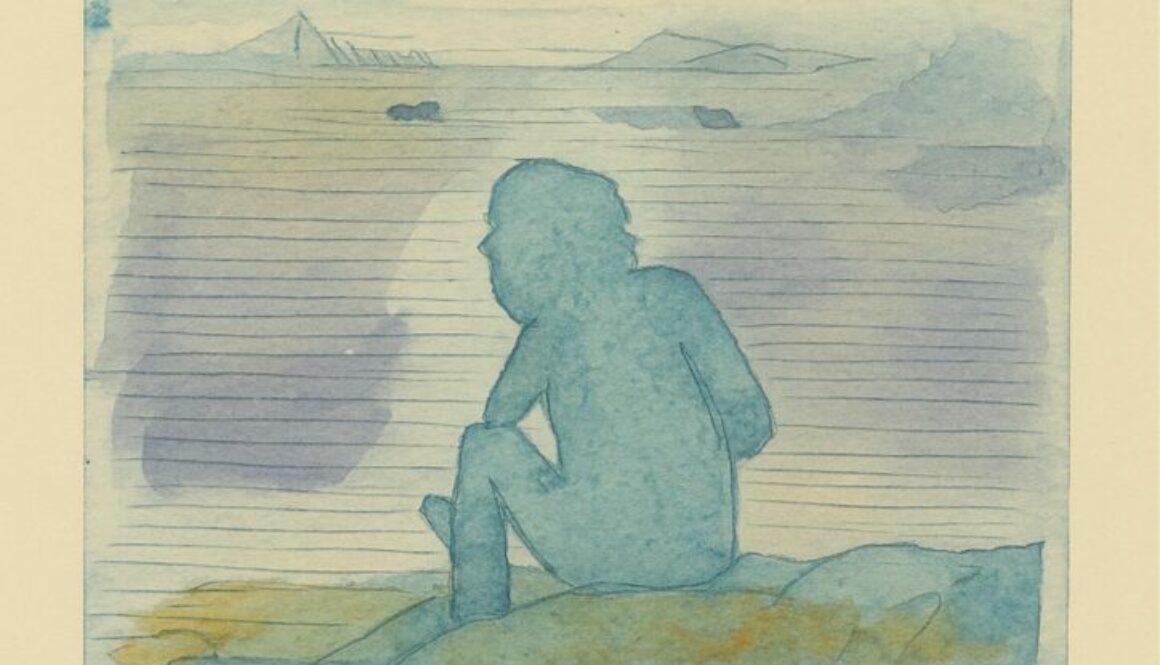
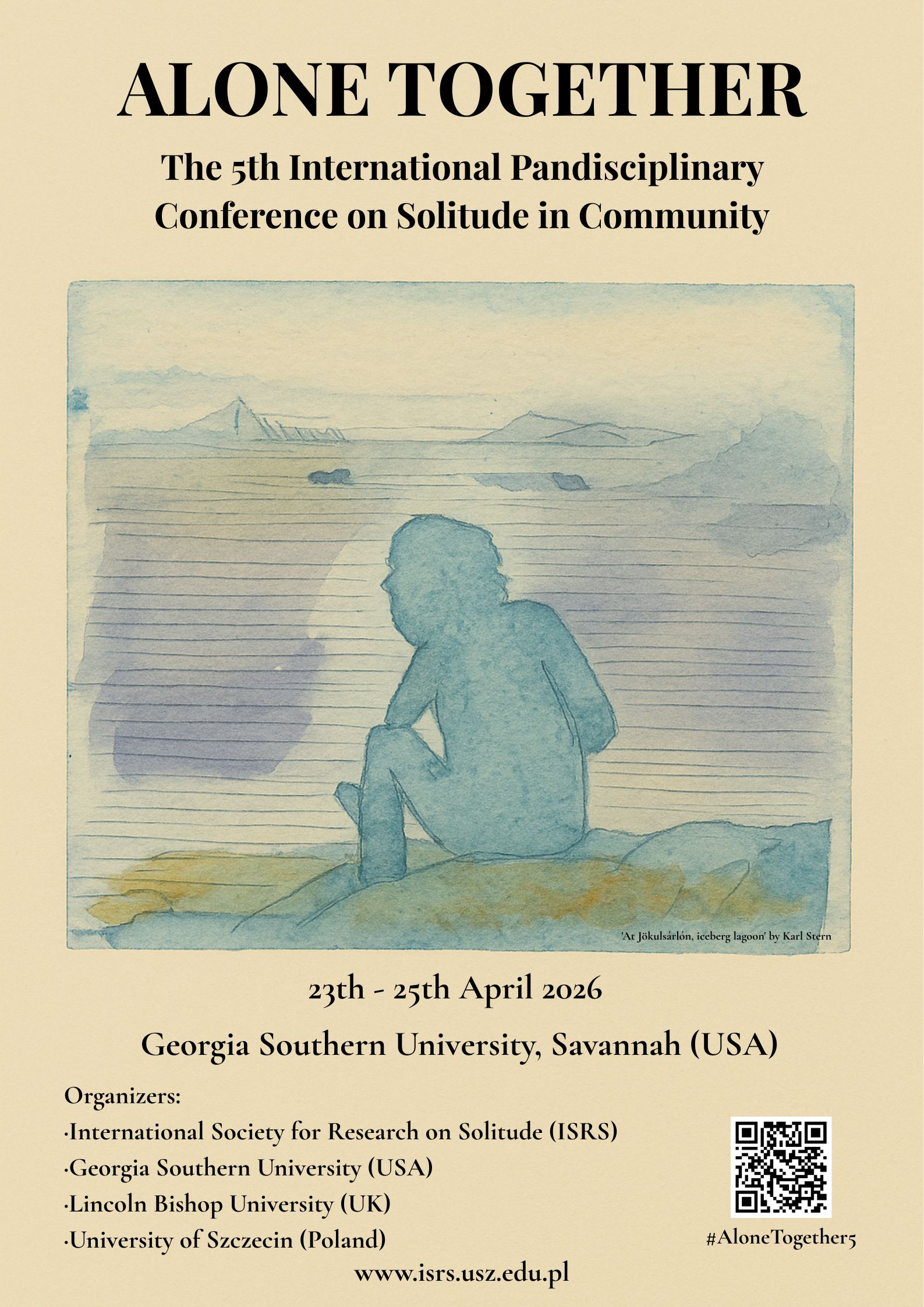
As organizers of the conference, the International Society for Research on Solitude (ISRS) welcomes contributions to the 5th International Pandisciplinary Conference on Solitude in Community: Alone Together which will take place between 23.04 and 25.04.2026 at Georgia Southern University, Armstrong Campus in Savannah, Georgia in the United States.
Hosted by Dr Richard E Cleveland at Georgia Southern University, the conference is also supported by Lincoln Bishop University (UK) and the Institute of Pedagogy at the University of Szczecin (Poland), honoured with the auspices of both rectors.
The ISRS welcomes papers and posters on any issues related to solitude, silence and loneliness, from any discipline and from any professional/practice context, and from researchers from all over the world. The ISRS welcomes presentations focusing on empirical research, theoretical exploration, and/or practitioner-based applications.
The submission of abstracts will be welcome till the 1st November, 2025. (Later submissions will be considered if there is still room on the programme.)
To submit, please fill in the form here: click on the link
To register for the conference and to pay: click on the link
Conference registration requires a fee, approximately 200 USD/ 176 EUR / 148 GBP / 750 PLN for general registration covering participation, refreshments and conference materials. (No accommodation or travel included.) Individuals who are members of the ISRS may register for the reduced fee of $150 USD and students are invited to register at the student-rate of $90 USD.
Exhibitors interested in attending and presenting their materials must register through the same registration portal, paying the fee of $250 USD (Note. Conference planning team will connect with registered exhibitors prior to the conference).
A pre-conference training event is tentatively scheduled for Wednesday April 22, 2026. Individuals are invited to register for the event, but the pre-conference training will be specifically focused on US-based clinical mental health counseling practitioners. The event registration fee of $75 USD covers attendance and Continuing Education Units (CEUs) for maintaining national clinical licensure (i.e., NBCC). More information regarding the pre-conference schedule and trainers will be forthcoming.
The conference will be held in-person at the Georgia Southern University Armstrong campus. At this time, no online/hybrid availability is planned. If this changes, the ISRS will update and notify participants as soon as possible.
The ISRS conference organizers welcome your proposals and looks forward to meeting you!
All the best,
The AT5 Organizing Committee Members
Professor Keri Facer – Professor of Educational and Social Futures, University of Bristol and Guest Professor of Education for Sustainable Development, SLU, Uppsala
The seminar will take place on Thursday, 23rd January at 4.00pm UK time /11.00am US EST time /5pm Polish time / 5pm Sweden time / 5 pm Malta /5pm Israeli time / 6pm Turkish time / 11pm Hong Kong / 1pm Melbourne. It will be held in MS Teams application. Click on the link
Silence as a meditative practice: three exemplary cases in dialogue
Drawing from the experience of the support-group ‘Preparing to retire well and beyond’, this paper conceptualises silence as a meditative practice. It showcases and compares three case studies.
‘Preparing to retire well and beyond’ is a reflective practice group, which supports the emotional and spiritual wellbeing of retiring and retired Anglican clergy in the Diocese of Truro (England). The first case study is based on the findings of its evaluation. It presents silence as a spiritual practice, which facilitates meditation.
In the second case study, this notion of meditative silence is contextualised in the work of the late Roman Catholic priest and philosopher Romano Guardini, and most specifically his ‘Meditations before Mass’ (2013). This collection was first published in Germany in 1939 as ‘Besinnung vor der Heiligen Messe’.
Engaging with the notions of silence as a meditative practice identified in the first and second case studies, the final example showcases silence in health care settings. More specifically, it focuses on chaplaincy and how ‘meditative’ silence becomes a safe space in hospitals.
These three case studies speak of the relevance of silence as a meditative practice in faith-based and secular contexts.
Biography
Dr Mauro Fornasiero is a social scientist with expertise in the evaluation of complex interventions in health, social care, education, and in religious contexts.
In 2017, he developed an interest in spiritual wellbeing when he worked at the ‘WHO Collaborating Centre for Culture and Health’ (University of Exeter) in an interdisciplinary project on subjective wellbeing.
His translation -from English to Italian- of the monograph ‘Cassian the Monk’ (Stewart, 1998) for ‘Edizioni Scritti Monastici’ (Abbey of Praglia, 2019) cemented his interest in monastic spirituality and its relevance for wellbeing.
Since 2022, he has assisted the The Revd John Eatock, Dean for Retired Clergy in the Diocese of Truro, with the evaluation of the reflective practice group ‘Preparing to retire well and beyond’. Exploring the meaning of priesthood in retirement, this group supports the emotional and spiritual wellbeing of Anglican clergy approaching retirement and in retirement.
In partnership with Liverpool Anglican Cathedral and York St John University, he is currently developing a project on wellbeing, which is informed by the science of cathedral studies (Francis, 2015).
The seminar will take place on Thursday, October 17th at 15.00 UK time /10.00 US EST time /4pm Polish time / 4pm Sweden 4pm time / Malta /5pm Israeli time / 5pm Turkish time / 10pm Hong Kong / 12pm Melbourne. It will be held in MS Teams application. If you want to join, click here.
What happens when a student, present in a classroom full of people, remains silent and unseen? If a student is both silent and invisible, can other students and the teacher truly perceive and notice that individual? This presentation explores the multifaceted nature of silence and invisibility within educational settings and broader societal contexts. It examines various ways to understand and respond to student silence and invisibility. It discusses the significance of these phenomena and their implications for education. It argues for the importance of listening to the silent and seeing the invisible as essential steps toward making the unseen visible. To understand and have insight into the meaning of silence and invisibility is of great importance, not only in educational settings, but for life itself.
Eva Alerby is a Professor of Education and holds a chair at the Department of Health, Education, and Technology at Luleå University of Technology in Sweden. She also serves as a Visiting Professor at the Department of Education at UiT – The Arctic University of Norway. Her research interests include relationships, identity, and diversity in education, as well as the philosophical and existential dimensions of education, such as embodiment and embodied knowledge, place and space, time and temporality, silence, and tacit knowledge. Her most recent book is Silence Within and Beyond Pedagogical Settings (2020). Additionally, she co-authored a recent article titled “Silent and Invisible Students: The Importance of Listening to the Silence and Seeing the Invisible” with J. Brown, published in the Journal of Silence Studies in Education (2021).